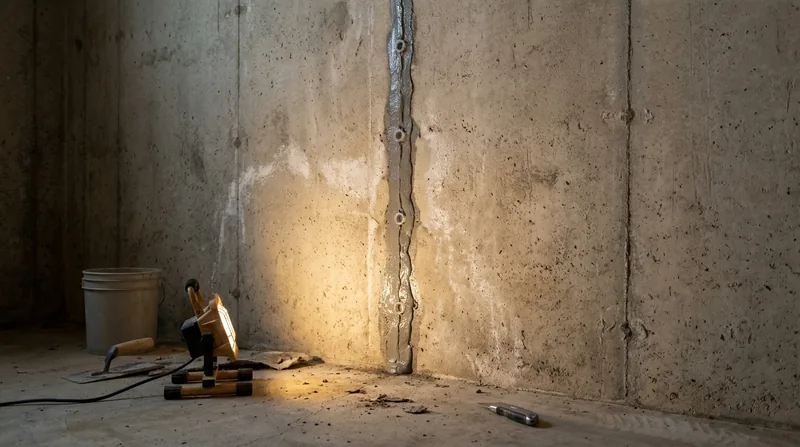




Foundation Crack Repair in Sioux Falls: Built for Glacial Clay and Deep Frost
If you need Foundation Crack Repair in Sioux Falls, the crack you are looking at is usually the result of the ground moving, not a bad batch of concrete. Sioux Falls sits on dense glacial till clay that drains slowly, and the frost line here reaches deep into the soil every winter. Add a spring water table that rises with snowmelt and Big Sioux River flooding, and you get walls that flex, settle, and open up.
We work on the building stock that actually exists here: 1880s Victorian and Queen Anne homes on pink Sioux quartzite and brick foundations in the Cathedral district, 1910s to 1940s bungalows and foursquares on full basements around McKennan Park, Pettigrew Heights, and Whittier, and 1950s to 1970s ranches with block basements across central and east Sioux Falls. Newer poured-concrete basements in the southwest and southeast crack too, just differently.
Our approach is simple: every crack gets inspected and matched to the right repair, not patched with a one-size-fits-all tube of sealant. If you want the broader picture of how water moves around a foundation here, start with our basement waterproofing service page, then come back to the crack itself.
Why Foundation Cracks Open Up in Sioux Falls and Not in Other Cities
The failure mode that dominates here is freeze-thaw movement in clay soil. Water soaks into the glacial till during spring snowmelt and heavy summer storms, the clay swells, and then a hard freeze pushes it against the wall. That cycle repeats every year, and vertical cracks, stair-step cracks in block, and horizontal cracks from bowing all follow from it.
- Spring snowmelt over still-frozen ground pushes water against the foundation instead of soaking in.
- Slow-draining glacial clay holds that water and builds hydrostatic pressure on the wall.
- Deep frost heaves footings and widens existing hairline cracks into active leaks.
- Older brick and quartzite foundations in the Cathedral district and All Saints crack differently than poured concrete in Tea or Brandon.
- Cottonwoods, ash, and oaks near the foundation pull moisture out of the clay and cause settlement cracks.
That is why a crack that looks minor in July can be wet by March, and why we inspect before we inject.
Key info: A 1910s bungalow near McKennan Park with a stair-step crack in a block wall is a different repair than a 2015 two-story in southeast Sioux Falls with a clean vertical crack in poured concrete. Same symptom, different cause, different fix.
For the structural side of wall movement, see how the city handles foundation permits through the City of Sioux Falls official site before any structural work begins.
How We Repair a Foundation Crack in Sioux Falls, Step by Step
We do not sell injection to every homeowner who calls. Some cracks only need sealing. Others are telling you the wall is under hydrostatic pressure and the real answer is drainage, not a patch. Here is how a typical call goes.
- We inspect the crack inside and out, note width, direction, and whether it is active or dormant.
- We check for efflorescence, wall seepage, and evidence of water after rain to confirm the source.
- We match the repair: epoxy injection for structural cracks that have healed and are not moving, polyurethane injection for active leaks and wet cracks that need to flex.
- We drill injection ports, flush the crack, and inject under pressure until the material reaches the far side.
- We finish the surface, and where the crack is wide or the wall is shifting, we discuss structural options like carbon fiber straps or wall anchors.
If the inspection shows the crack is a symptom of a wet basement rather than the cause, we say so plainly and point you to the right scope.
Key info: A homeowner in Hartford had a hairline crack that wept every March. Polyurethane injection stopped the leak, but the inspection also found a failed footing drain, so the honest answer was injection now and a drainage conversation for the following spring.
When the crack is part of a larger moisture problem, our foundation waterproofing page covers the below-grade side of the work.
Crack Repair Methods We Use and When Each One Fits
Not every crack takes the same material. The table below is the short version of how we decide, based on what the crack is doing and what the wall is made of.
| Approach | Description | Best for |
|---|---|---|
| Epoxy injection | Structural-grade epoxy fills the crack and bonds the concrete back together. | Dormant vertical cracks in poured walls that are not actively leaking. |
| Polyurethane injection | Flexible foam expands into the crack and seals active water paths. | Wet, active leaks and cracks that move with freeze-thaw cycles. |
| Surface sealing and parging | Hydraulic cement and a breathable parge coat close minor seepage points. | Hairline cracks and porous block walls with light efflorescence. |
| Carbon fiber straps | Straps anchor to the footing and floor to resist inward wall movement. | Horizontal cracks and early bowing from soil pressure. |
| Wall anchors | Anchors driven into stable soil pull the wall back toward plumb. | Bowing walls where the crack has widened and the wall is moving. |
If your crack falls into the structural category, our bowing wall repair page explains the next step.
Foundation Crack Repair Cost in Sioux Falls: What to Expect
Most single-crack injections in Sioux Falls start at From $450. That figure covers a straightforward vertical crack in an accessible poured wall, including ports, material, and cleanup. The number moves from there based on what the inspection finds.
- Crack length and width drive material volume and time.
- Access matters: a finished basement wall or a tight mechanical corner takes longer than an open wall.
- Block versus poured concrete changes the method and the price.
- Active leaks, multiple cracks, or structural movement push the job past simple injection.
- Structural repairs like carbon fiber or anchors are quoted separately after inspection.
Get two or three estimates and compare scope, not just the bottom line. A cheap patch on a moving wall is money spent twice. Our full pricing overview lays out how we build a quote.
Hiring a Foundation Crack Repair Contractor Near Me in Sioux Falls
You want someone who inspects before quoting, carries insurance, and will tell you when the crack does not need injection. Ask for proof of licensing and insurance, and get a certificate sent to you before work starts. Check references from homes built in the same era as yours, because a 1920s quartzite foundation and a 2010 poured wall are not the same job.
Structural foundation repair, egress work, and changes to drainage or sump discharge connections commonly require permits in this region, and thresholds vary by jurisdiction, so confirm with the local building department before work begins. If your home sits in a historic district or under an HOA, check those rules early. Reach out through our contact page and we will walk you through what applies to your address.
We are a Basement Health Association member and we work below grade only. Call (605) 937-6823 to set up an inspection.
Foundation Crack Repair in Sioux Falls: Pricing Guide
| Service | Price | Details |
|---|---|---|
| Single crack injection | Starting at $450 | Covers one accessible vertical crack in a poured wall, including ports, material, and cleanup. |
| Multiple crack injection | Starting at $750 | Priced per additional crack, with access and total linear footage the main cost drivers. |
| Block wall crack repair | On estimate | Block walls need a different method and sometimes structural review before a number is given. |
| Structural repair (straps or anchors) | On estimate | Bowing or shifting walls require an on-site inspection to size the repair correctly. |
| Travel | Included | In Sioux Falls and surrounding areas, no separate call-out or mileage fee. |
| Estimate | Free | Response within 24h at (605) 937-6823, no obligation to book. |
Indicative pricing, the exact cost depends on square footage, finish, and site access. Free personalized estimate within 24h at (605) 937-6823.


