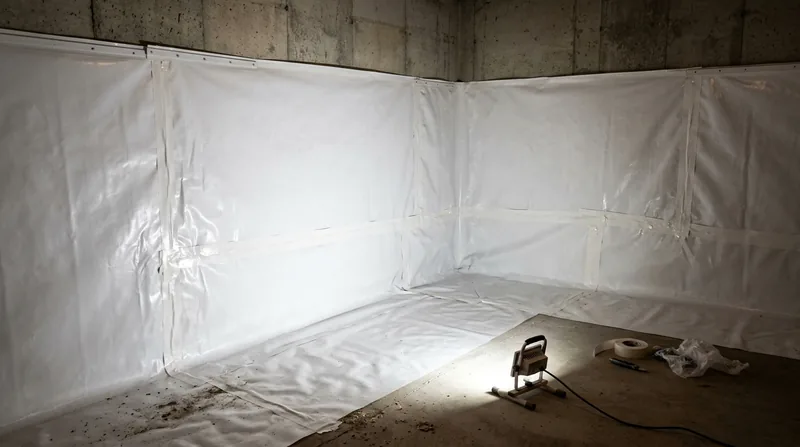




Sioux Falls sits on the open northern plains along the Big Sioux River, and the ground under most of this city is dense glacial till clay that drains slowly and holds water against foundation walls. That clay, combined with a spring water table that rises with snowmelt and river flooding, pushes moisture vapor into basements through block walls and slab edges all winter long. Vapor Barrier Installation in Sioux Falls is the below-grade fix that stops that vapor at the wall and floor instead of letting it condense on cold concrete. We install heavy-duty barrier sheets with sealed seams, taped terminations, and sump integration where the floor needs it. If you have pulled storage off a damp basement wall in Pettigrew Heights or found efflorescence on a poured wall in Tea, this is the layer that was missing. Start with a free basement inspection and we will tell you what the wall is actually doing.
Why Vapor Barrier Installation Matters in Sioux Falls Clay and Frost
Most Sioux Falls basements are not flooding. They are sweating. Block walls laid in the 1910s and 1920s around McKennan Park and Whittier wick groundwater vapor through mortar joints, and poured walls in the 1990s and 2000s subdivisions in southwest Sioux Falls show the same thing along the slab edge. When warm interior air meets a cold foundation wall in January, that vapor condenses, and the wall stays wet until spring. A proper barrier on the wall and slab keeps the moisture in the soil where it belongs.
- We seal the wall face and the cove joint so vapor cannot bypass the sheet at the floor line.
- We tape every seam and terminate the sheet into the sump basin rim so water has a path out.
- We leave the top edge mechanically fastened and sealed, not just tucked behind framing.
- We check the exterior grade and downspout extensions before blaming the wall, because roof water dumped at the foundation defeats any barrier.
In a city where frost reaches deep into the soil and the spring thaw sits on ground that is still frozen, the vapor load on a basement wall is a seasonal constant, not a one-time event.
Key info: A 1920s foursquare near McKennan Park with a damp block wall and white efflorescence usually needs a wall vapor barrier and sealed cove joint, not exterior excavation. We confirm that with a moisture reading before we quote anything.
Permits for work that alters drainage or the sanitary connection of a sump discharge vary by jurisdiction, so confirm the current requirement with the City of Sioux Falls building department before work begins.
How We Install a Vapor Barrier in a Sioux Falls Basement
We treat the barrier as the last step in a moisture plan, not the first. If the wall is taking hydrostatic pressure or the floor drain tile is failed, a sheet over it will trap water behind the plastic and make the problem worse. So we inspect first, then decide whether the barrier goes over a dry, stable wall or whether an interior perimeter drain has to go in first.
- We walk the basement and read moisture at the wall base, the cove joint, and the slab edge.
- We identify the source: vapor drive through the wall, a failed footing drain, or a sump that is not keeping up.
- We clear the wall, remove loose parging, and patch any active crack before the sheet goes on.
- We hang heavy-duty barrier sheet from the top plate down, overlapping seams and sealing them with compatible tape.
- We terminate the bottom edge into the sump basin or drain tile and seal the cove joint.
- We test the sump and check valve, then leave the basement with a clear path for any water that reaches the floor.
The result is a wall that stays dry to the touch and a floor that drains instead of puddling.
Key info: On a 1970s split-level in eastern Sioux Falls, the block wall was dry above grade and wet at the base. The barrier alone would have hidden it. We tied the sheet into the existing interior drain tile system and the sump, and the wall stayed dry through the next spring melt.
Vapor Barrier Approaches We Use Below Grade
Not every basement gets the same sheet or the same detail. A finished lower level in a newer Brandon two-story needs a different termination than an unfinished 1915 basement in All Saints with a stone and brick foundation. The table below shows the approaches we use and where each one fits.
| Approach | Description | Best for |
|---|---|---|
| Wall sheet barrier | Heavy-duty sheet hung over the interior wall face, seams taped, top and bottom sealed. | Block or poured walls with vapor drive and no active seepage. |
| Slab-edge barrier | Sheet turned onto the floor and sealed at the cove joint where wall meets slab. | Basements with damp floors and efflorescence at the base of the wall. |
| Barrier with sump integration | Sheet terminated into the sump basin rim with a sealed boot and check valve. | Floors that collect water and need a controlled discharge path. |
| Barrier over drain tile | Dimple board and sheet installed after an interior perimeter drain is placed. | Walls under hydrostatic pressure where water must reach the tile first. |
| Finished-wall barrier | Sheet behind framing with sealed penetrations and a serviceable access at the sump. | Finished lower levels in newer southwest Sioux Falls homes. |
We match the approach to what the wall is doing, not to a standard package.
Vapor Barrier Installation Cost in Sioux Falls: What to Expect
Most barrier work in this market starts at From $3/sq ft, and that figure covers the sheet, seam tape, fasteners, and cove joint sealing on a straightforward wall. The number moves with wall height, how much parging has to come off, whether the sheet has to tie into a sump or drain tile, and whether the basement is finished and needs framing pulled back. A 1910s stone-and-brick foundation in the Cathedral district takes more prep than a clean 2005 poured wall in Harrisburg. Get two or three written estimates so you can compare the same scope, not just the bottom line. Our full pricing overview breaks down the line items.
Key info: A 900 sq ft unfinished basement in Crooks with a dry block wall and no sump usually lands near the low end. The same square footage in Baltic with an active cove joint leak and a failed sump needs drain tile first, and that changes the scope before the barrier is even quoted.
Choosing a Vapor Barrier Contractor Near Me in Sioux Falls
Basement work attracts a lot of generalists. A dedicated below-grade contractor will read moisture, explain why the wall is wet, and tell you when a barrier is not the right fix. Ask for proof of insurance, a written scope, and references from jobs in your part of the city. Confirm who pulls any permit that touches drainage or the sump discharge, and check with your HOA if you are in a newer development with architectural rules. We are a Basement Health Association member and we put the scope in writing. Reach out through our contact page to set up the walkthrough.
If the wall is bowing or the crack is active, a barrier is not the answer, and we will say so. For those, see foundation crack repair or bowing wall repair first.
Vapor Barrier Installation in Sioux Falls: Pricing Guide
| Service | Price | Details |
|---|---|---|
| Wall vapor barrier | Starting at $3/sq ft | Includes heavy-duty sheet, seam tape, fasteners, and sealed top and bottom edges. |
| Barrier with slab edge sealing | Starting at $4/sq ft | Adds cove joint sealing and sheet turn-down onto the floor slab. |
| Barrier with sump integration | Starting at $5/sq ft | Includes sealed boot at the sump basin rim and check valve inspection. |
| Barrier over new drain tile | On estimate | Scope depends on wall length, footing access, and whether the slab is cut. |
| Travel | Included | In Sioux Falls and surrounding towns, no separate call-out or mileage fee. |
| Estimate | Free | Response within 24h at (605) 937-6823, no obligation to book. |
Indicative pricing, the exact cost depends on square footage, finish, and site access. Free personalized estimate within 24h at (605) 937-6823.


