The Geology Under Your Feet: Why Sioux Falls Clay Soil Is a Waterproofing Challenge
If you live in Sioux Falls, you already know that the ground here is not like the sandy or rocky soils you might find in other parts of the country. Much of the region sits on a thick layer of glacial clay, left behind by ancient ice sheets that once covered eastern South Dakota. This clay is dense, sticky when wet, and nearly impermeable when dry. For a homeowner, that translates to a simple but frustrating reality: water does not soak away the way it should.
When rain or snowmelt hits this kind of clay soil, it pools on the surface or saturates the top few inches before slowly percolating downward. That means the soil around your foundation stays wet for days after a storm. Over time, that moisture builds hydrostatic pressure against your basement walls. If there is even a hairline crack, a porous block, or a failed joint, water will find its way in. This is why Basement Waterproofing in this area often starts with understanding the soil, not just the crack you see inside.
Frost Heave and Soil Movement: The Seasonal Cycle That Stresses Foundations
Sioux Falls winters are cold enough to drive frost deep into the ground, and that frost does something remarkable and destructive: it expands. When water in the soil freezes, it grows by roughly nine percent in volume. That expansion pushes upward and outward against anything in its path, including your foundation walls and footings. This is known as frost heave, and it is one of the leading causes of foundation damage in the upper Midwest. A foundation that was perfectly sound in October can develop new cracks by March.
But the damage does not stop when the thaw comes. As the ground warms, the clay softens and settles, sometimes unevenly. That back-and-forth cycle of freezing, expanding, thawing, and settling is what we call soil movement, and it is relentless. It opens seams, widens existing cracks, and can even shift the foundation enough to create new entry points for water. Homeowners in Brandon and Hartford see the same pattern, because the soil and climate do not stop at the city limits. If you notice cracks that seem to grow wider each year or doors that stick only in certain seasons, soil movement may already be at work.
Minnehaha County Basement Leaks: What Homeowners Actually See
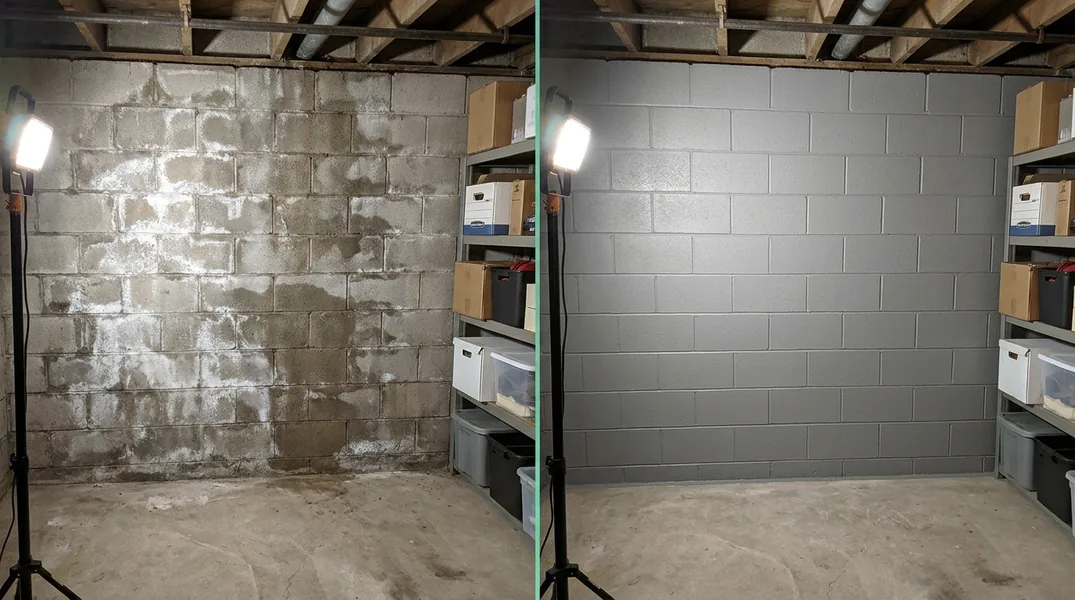
Most Minnehaha County basement leaks do not announce themselves with a flood. They start small: a damp spot near the cove joint where the wall meets the floor, white powdery efflorescence on the block, or a musty smell that lingers even after you run a dehumidifier. These are early warning signs that water is already moving through the foundation. Because clay holds moisture against the wall for so long, the problem tends to worsen slowly and quietly until one heavy spring rain pushes it over the edge.
What many homeowners do not realize is that the leak they see inside is often the last step in a long chain of events. Water has to travel through saturated soil, build pressure against the wall, and find a weakness before it ever reaches your floor. That is why patching a crack from the inside rarely solves the problem for good. A proper diagnosis looks at drainage, soil conditions, and the foundation as a whole. If you are seeing recurring dampness or staining, it is worth getting a professional assessment before the next freeze-thaw cycle makes things worse. You can request a free estimate to find out exactly what is happening and why.
Basement Waterproofing Near Me: Solutions That Work With Sioux Falls Soil
Not every waterproofing method works equally well in heavy clay. French drains that rely on gravity alone can clog or fail when the surrounding soil does not drain. That is why local contractors often recommend solutions designed for slow-draining, high-pressure soils. An Interior Drain Tile System captures water at the cove joint and directs it to a sump pump before it can spread across your floor. It works regardless of how saturated the soil outside becomes, which makes it a reliable choice for clay-heavy lots.
On the exterior side, Exterior Basement Waterproofing addresses the problem at its source by creating a barrier between the soil and the foundation wall, often combined with drainage board and gravel to relieve pressure. And for foundations showing signs of movement or structural stress, Foundation Waterproofing can stabilize the situation before it becomes a larger repair. The right approach depends on your specific soil conditions, foundation type, and how far the water intrusion has progressed. A local expert can walk you through the options and help you avoid overspending on a fix that does not match the problem.
When to Call a Professional (and What to Ask)
Some homeowners wait until they are mopping up water to call for help, but the best time to act is when you first notice the warning signs. Hairline cracks, efflorescence, a persistently damp smell, or a sump pump that runs constantly are all reasons to get an inspection. In a climate like ours, small issues rarely stay small. The freeze-thaw cycle and expansive clay see to that. Addressing a minor problem early is almost always less expensive than repairing a finished basement later.
When you call, ask specific questions. How will the solution handle clay soil that does not drain well? What happens to the water once it is collected? Is there a warranty, and what does it cover? A reputable contractor will welcome those questions and explain the reasoning behind their recommendations. If you are in Dell Rapids or anywhere in the Sioux Falls area, you can reach Sioux Falls Waterproofing at (605) 937-6823 to schedule an inspection. You can also ask about pricing upfront so there are no surprises. Protecting your basement starts with understanding the ground beneath it, and that conversation is worth having before the next season of frost and thaw arrives.
Looking for a professional basement waterproofing contractor in Sioux Falls? Sioux Falls Waterproofing responds fast for all your basement waterproofing needs.
Get a Free QuoteOur services: Basement Waterproofing · Interior Drain Tile System · Exterior Basement Waterproofing